



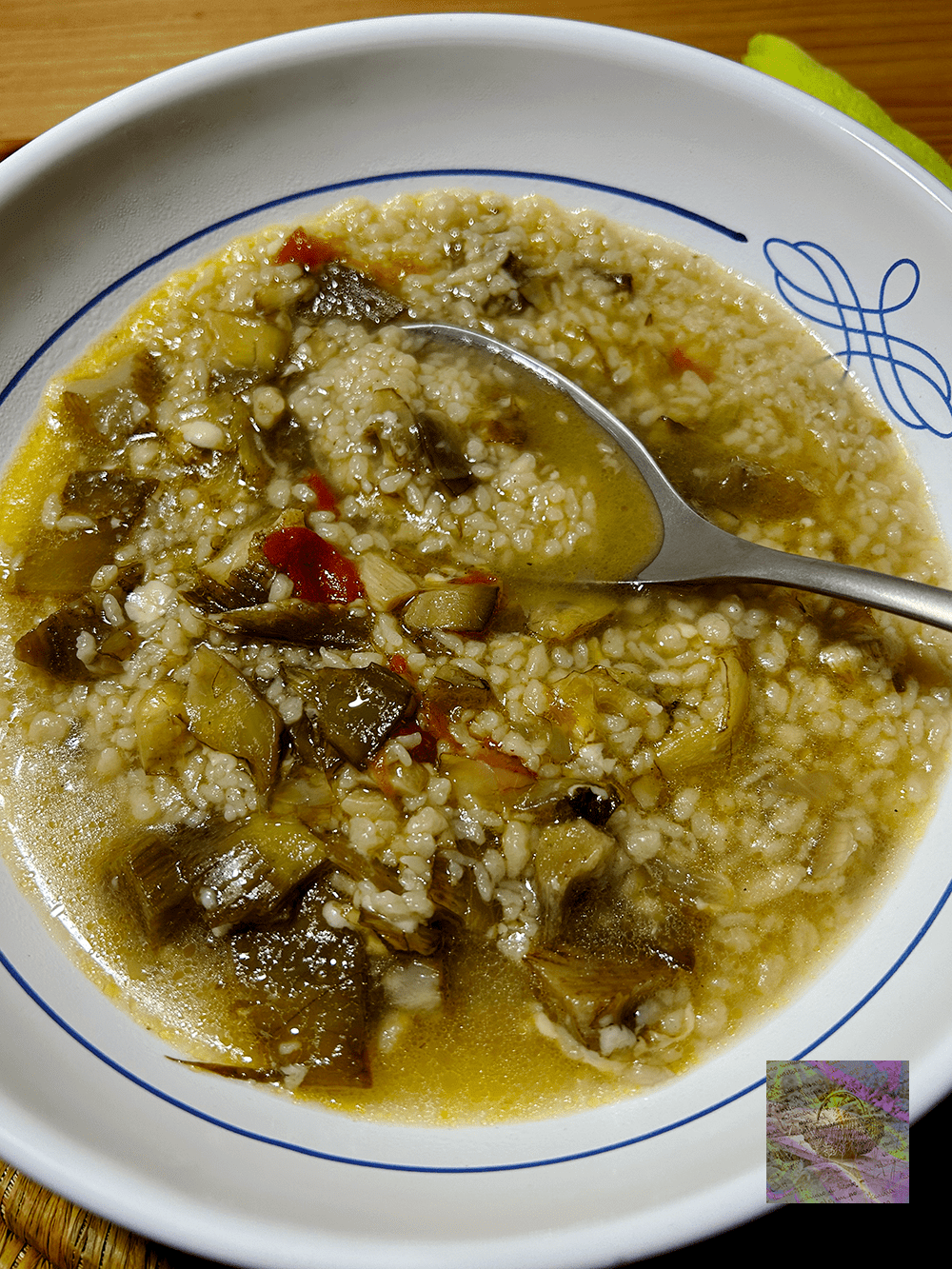
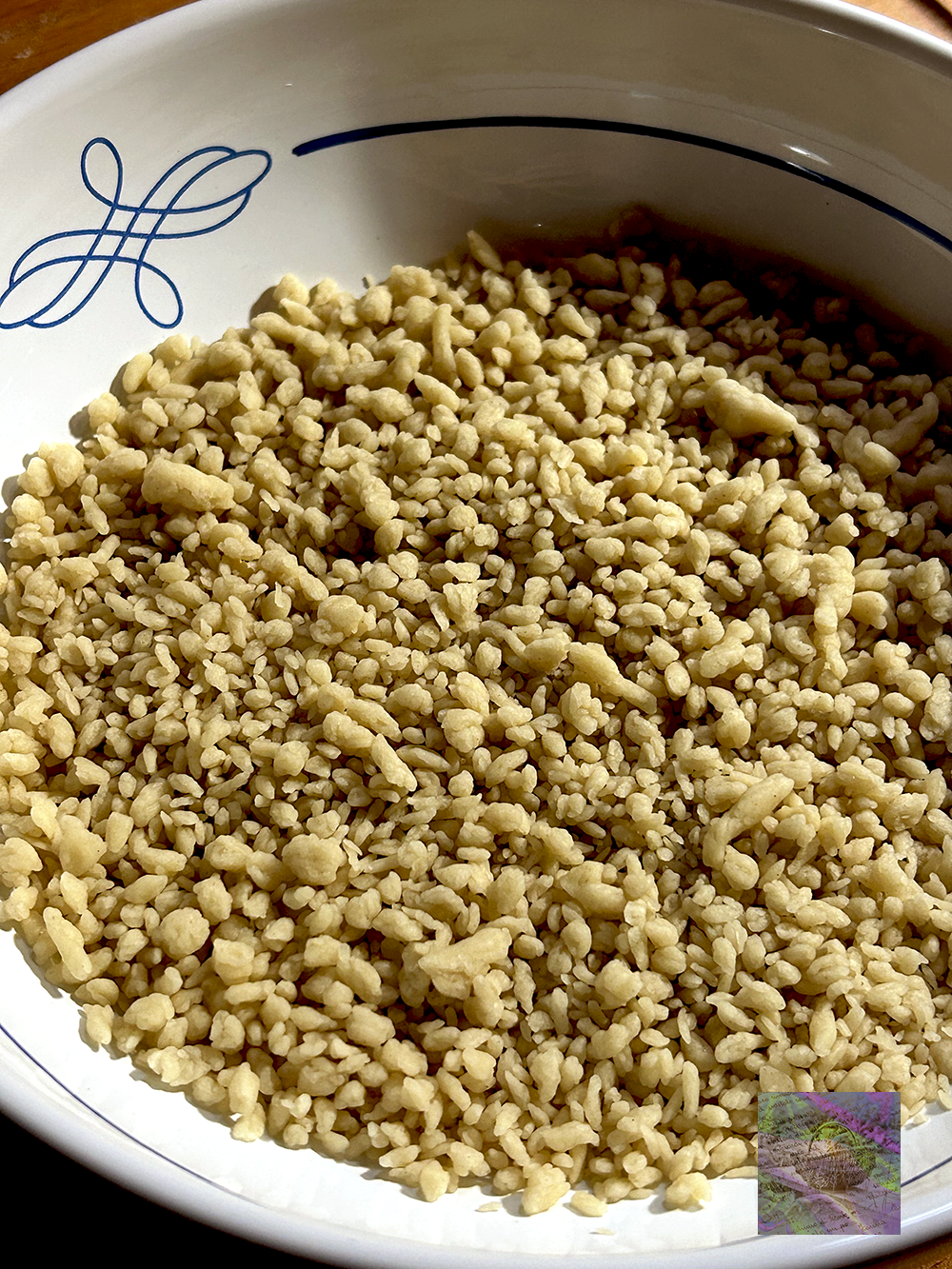
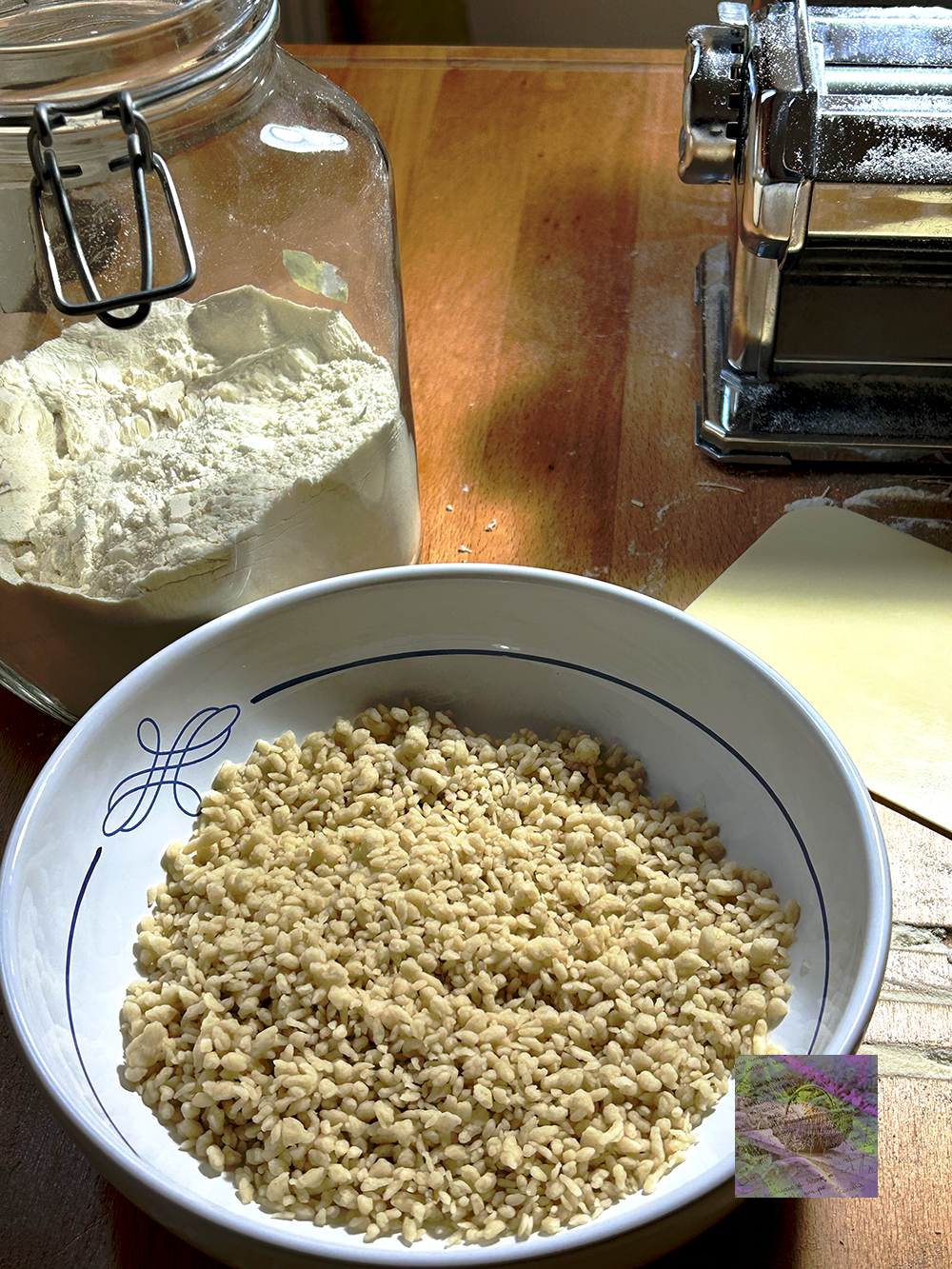
It’s already the end of January. The new year has just begun, and we’re laying the groundwork for the activities that await us in the coming months. In the midst of Winter, our bodies require more warmth to stay healthy. So, we prepared an excellent artichoke soup following Mom’s tips and using also tiny wheat flour kneaded gems we hand-made according to the local tradition.
“Dhriddhri” is the name of this special fresh pasta. /Ddhr/sound might bring to mind a term used by children to refer to this magical, fun pasta dough. Perhaps it could come right from a specific sound, a voiced retroflex plosive [ɖ] in a foreign word. In this regard, let’s add that the /ddhr/[ɖ] sound is often found in Apulia in everyday vernacular language and it is present in words affecting different semantic areas.
Indeed, in the specific, the use of the small word “ddhri” in the vernacular language, in certain areas of Apulia, is for “those”, “quelli”, with demonstrative adjective (determiner) value. Now, try to think about the way the local language has evolved through contact with ancient civilizations that have succeeded one another and historically dominated our territory.
By the way, have you got a sound like /ddhr/ or /rd/ in the language you speak or in the area where you live, by chance?
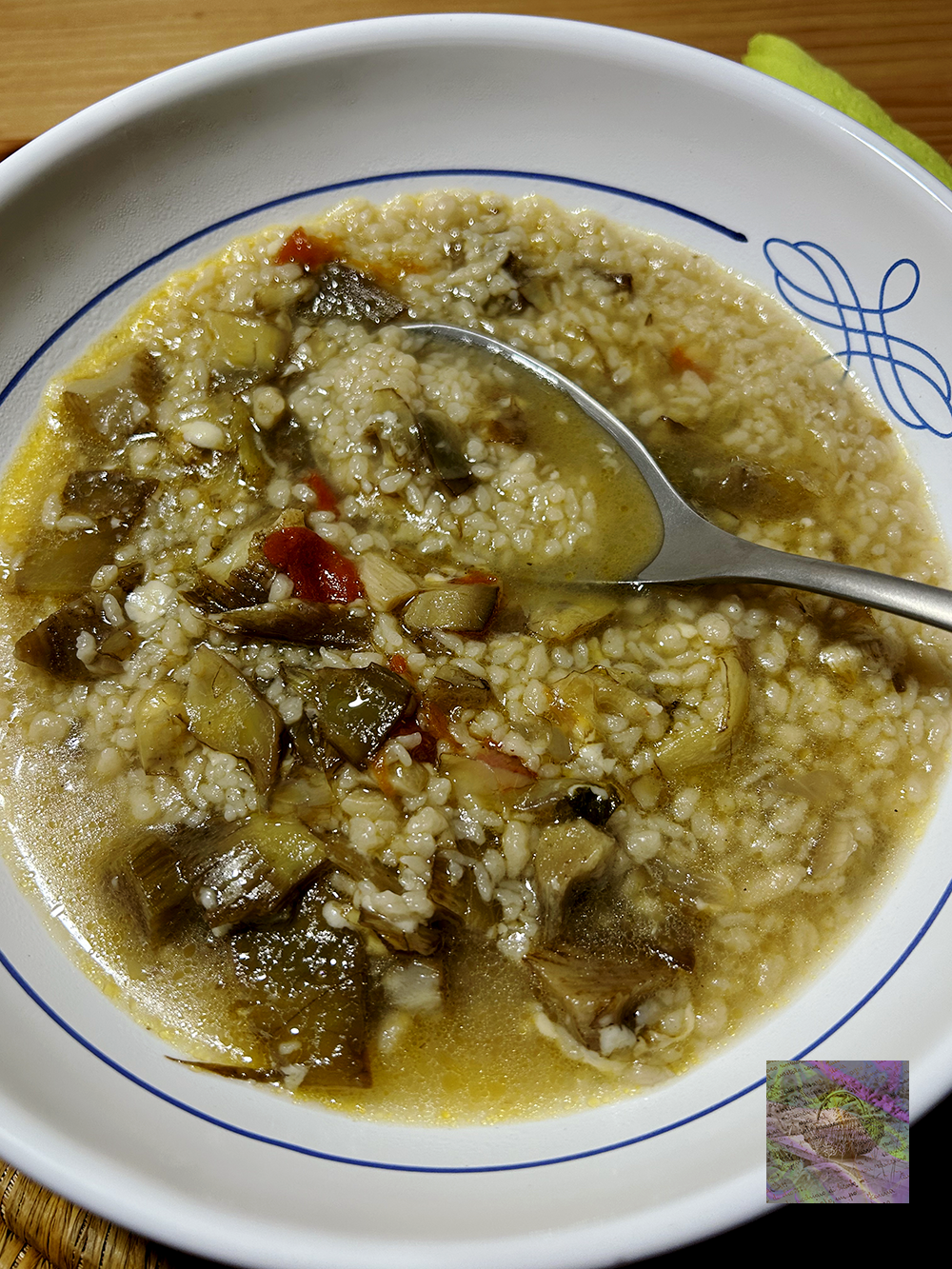
In the meanwhile, our delicious artichoke soup is ready and served at the dining table. Welcome.
